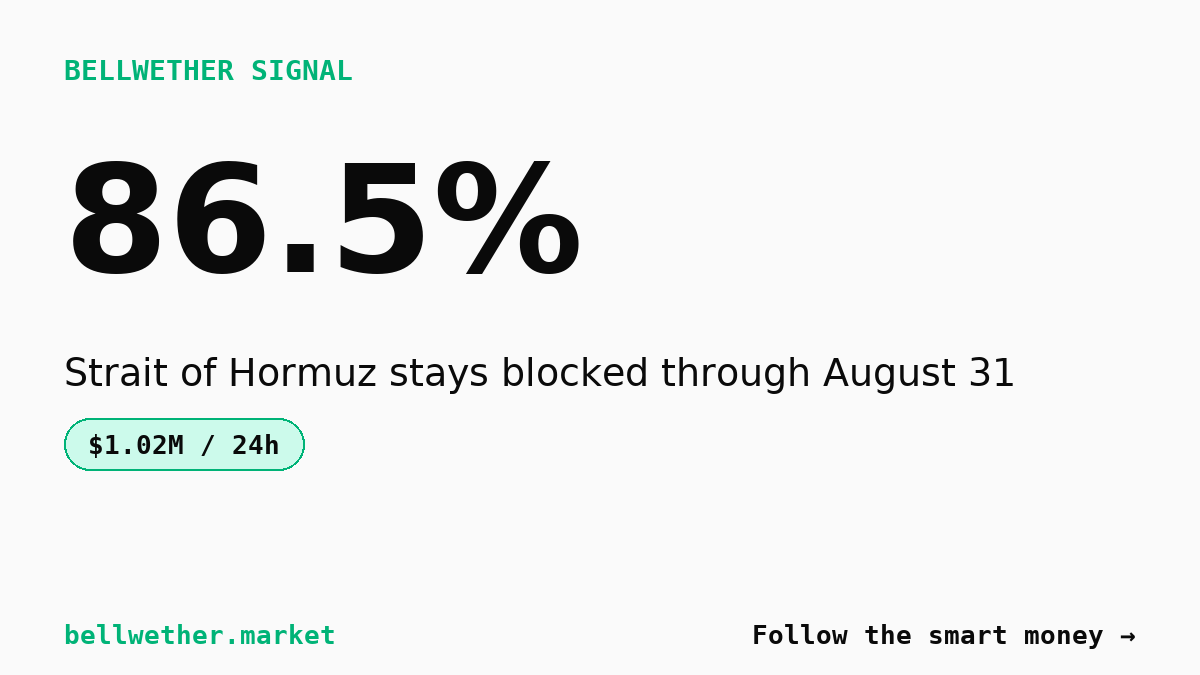
Over $1.02 million flowed into a single Polymarket contract in the past 24 hours, as traders piled into bets that the Strait of Hormuz blockade will NOT return to normal by August 31. The No side now commands 86.5% probability, down slightly from 88.5% a day earlier, signaling traders see months, not weeks, before the critical shipping lane reopens.
The contract, which resolves Yes only if maritime traffic normalizes by the end of August 2026, drew $1,022,337 in volume over the past day. The 2 percentage point softening in the No price reflects modest repositioning, but the overwhelming consensus remains: smart money sees the crisis dragging well past summer. Closely related markets reinforce the view. Traders assign just 11.45% odds the U.S. announces an end to the Iranian blockade by August 7, down over 20 points in 24 hours, and only 8.5% probability the strait clears by mid-August.
The positioning implies traders are pricing in a prolonged standoff, with diplomatic or military resolution extending into late summer or fall. While a U.S.-Iran ceasefire by July 31 sits at 82.5%, that figure has ticked down 2 points, suggesting rising skepticism even about near-term de-escalation translating into reopened shipping. The market is effectively betting that even if hostilities cool, practical restoration of Hormuz traffic will lag by weeks or months.
Attention now turns to any signals of direct negotiation or military posture shifts. If Washington or Tehran float concrete timelines for reopening the strait, expect sharp volatility across all related contracts. Conversely, continued silence or escalatory rhetoric will likely cement current probabilities and push the No side even higher.
Bottom line: The smart money is positioning for a long blockade, with the Hormuz shipping disruption extending well beyond summer 2026.