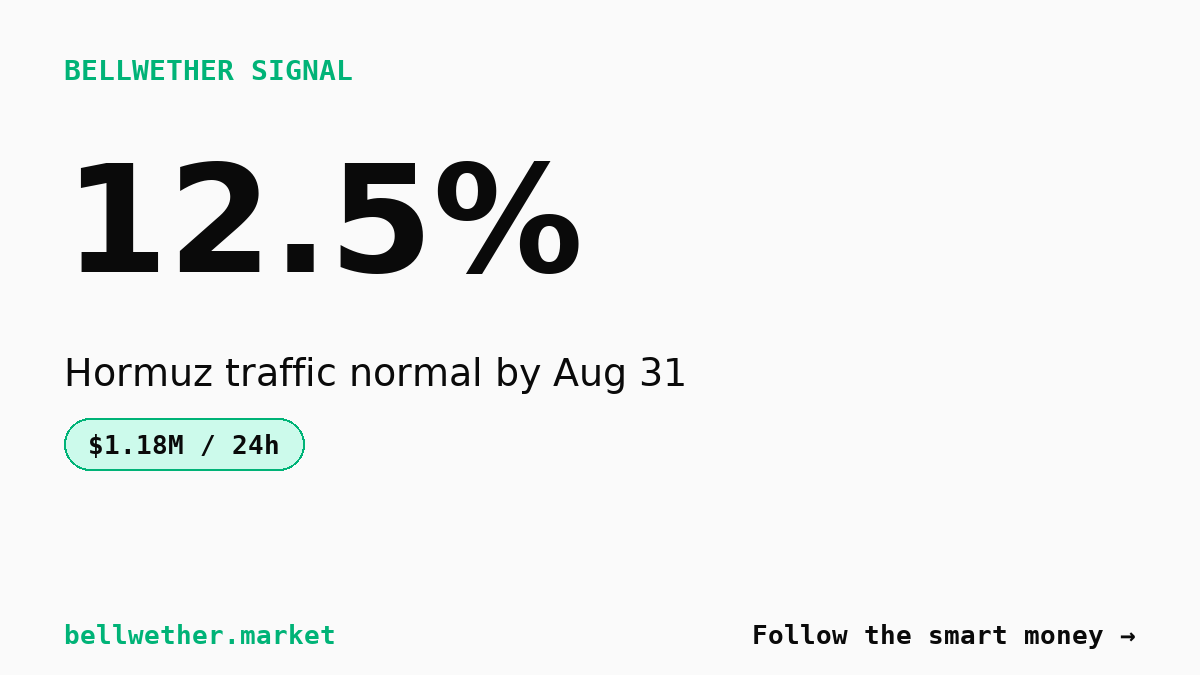
Prediction markets are pricing just a 12.5% chance that traffic through the Strait of Hormuz will return to normal by the end of August 2026, making it the highest-volume market signal of the past 24 hours. The contract saw $1.18 million in trading volume over the last day, with the ‘No’ outcome settling at 87.5 cents and the ‘Yes’ outcome at 12.5 cents.
The market dropped 1 percentage point in the last 24 hours, reflecting continued pessimism about a swift resolution to the Iranian blockade that has disrupted one of the world’s most critical oil chokepoints. At current pricing, traders are overwhelmingly positioned for an extended disruption lasting well beyond the end of summer. The Strait of Hormuz typically handles roughly one-fifth of global oil supply, making any prolonged closure a significant geopolitical and economic event.
The smart-money positioning suggests traders see little prospect of a quick diplomatic or military solution. Related markets reinforce this view: a separate contract on whether the U.S. will announce an end to the Iranian blockade by August 7 trades at 15 cents (down 24.6 points in 24 hours), while a nearer-term market on normal traffic resuming by August 15 sits at just 1 cent. Collectively, these signals point to expectations of a protracted standoff with Iran that could stretch into the fall or beyond.
What to watch: any major diplomatic breakthrough, naval engagement, or shift in Iranian policy could trigger sharp repricing across these related contracts. Markets on a U.S.-Iran effective ceasefire by July 31 are trading at 74.5 cents, down 10 points in 24 hours, indicating some hope for a near-term de-escalation even if full normalization of shipping traffic remains unlikely in the immediate term. Oil price movements and statements from Washington or Tehran will be key leading indicators.
The takeaway: traders are betting on a long Hormuz crisis, not a quick fix.